Call Now (601) 794-0081
Call Now (601) 794-0081
Non-surgical spinal decompression is a controlled, evidence-based therapy for herniated discs, sciatica, spinal stenosis, and degenerative disc disease. Before committing to surgery, there’s a conversation worth having.
No Medications Required
Neuropathy Experience, MS Neuro Specialist
Neuropathy Specialist
Accepted
Non-surgical spinal decompression is a controlled traction therapy that gently separates the vertebrae — creating negative intradiscal pressure that draws herniated or bulging disc material back toward its proper position and encourages rehydration of the damaged disc tissue.
When a disc is herniated or compressed, it puts pressure on the adjacent nerves. That’s what creates the burning, shooting pain down the leg (sciatica), the numbness in the arms, the lower back pain that won’t resolve. Decompression removes that pressure mechanically — giving the disc the space and environment it needs to recover.
Treatment sessions typically last 15–20 minutes and are generally comfortable. The table is designed to relax and stretch the spine at intervals through a precise, computer-controlled process.
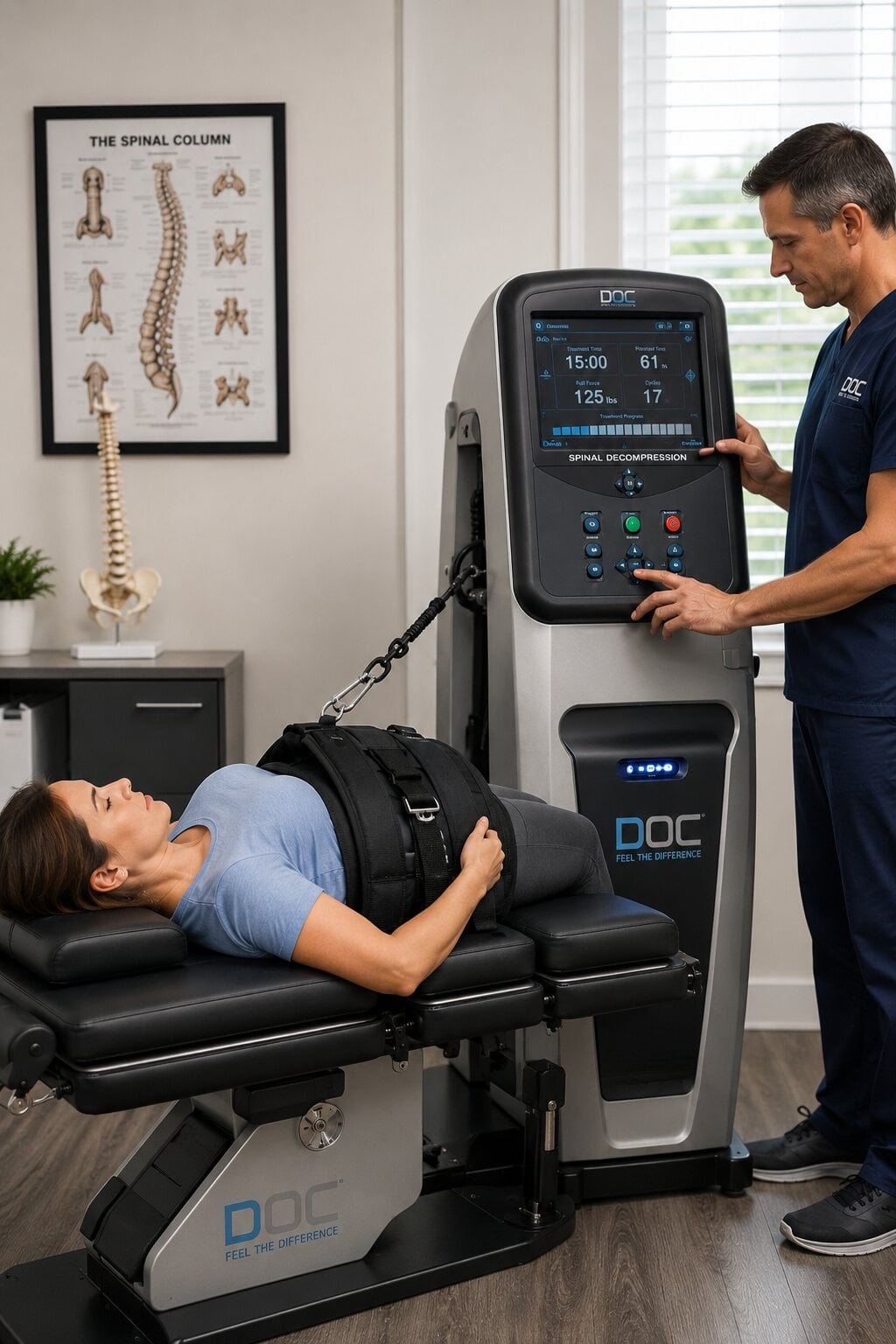
Most patients find the treatment comfortable — many fall asleep during sessions. The traction is applied gradually and released in a cyclical pattern, which allows muscles to relax rather than resist. Some patients with acute disc injury may experience mild discomfort in early sessions. Dr. Acord will monitor your response and adjust the protocol accordingly.
This depends entirely on your specific condition — the severity of the disc involvement, how long you’ve been dealing with it, your overall health, and how you respond to initial treatment. Dr. Acord will give you a realistic timeline at your evaluation, not a vague “let’s see how it goes.” You’ll have a written plan with goals and expected milestones.
Surgery for disc conditions is sometimes necessary — particularly in cases of severe neurological deficit, progressive weakness, or loss of bladder/bowel control. However, for many patients with herniated discs and sciatica, non-surgical options haven’t been fully exhausted. Getting a second evaluation from a non-surgical perspective before committing to surgery is a reasonable step. Dr. Acord will give you an honest assessment of whether your case is appropriate for decompression, or whether surgical consultation is the right next move.
Results from spinal decompression can be long-lasting when combined with appropriate rehabilitation exercises and lifestyle modifications. Dr. Acord’s protocol includes guidance on protecting your spine after treatment. Some patients with significant degenerative changes will benefit from periodic maintenance care. Decompression addresses the current injury effectively for most candidates, but long-term spinal health requires ongoing attention to posture, movement, and core stability.
Dr. Acord is a Medicare-participating provider. Coverage for spinal decompression varies by plan. Please bring your insurance information to your first $47 visit, and we’ll perform a complimentary benefits check during your appointment so you have a clear understanding of your coverage before committing to any treatment.
The best way to know whether Dr. Acord can help you is to sit down with him. Your evaluation is 100% obligation-free — a genuine clinical conversation, not a sales appointment.